
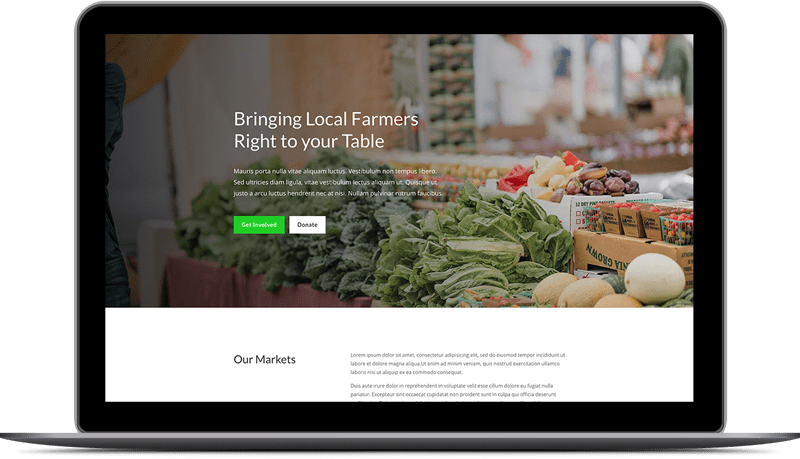
The Best Web Design Trends For 2018
Throughout 2017 there has been an extraordinary breadth in web design trends which have varied in style and intricacy. Continually the web design industry changes especially increasing in creativity and innovation forging new and popular trends. Therefore, as the field of web design grows we have put together some of our ideas of what will be the best web design trends for 2018.
Mobile Devices
It is now officially documented that mobile phones are the primary device used for internet browsing. Therefore, the continuous drive towards delivering web design that is effective, clear and can be utilised appropriately for smaller screens will be most important.
Responsive Web Design
This may sound familiar and not new to 2018 but there is still increasing pressure for brands and businesses to create websites with a responsive design. Responsive websites are designed with an approach to building a site using CSS media queries and flexible layouts to create one single, dynamic site. The finished website will then adjust the way it displays the content according to which device it is being viewed on, i.e. mobile, tablet or desktop. 2018 is set to see the biggest growth in responsive websites due to its success in achieving higher ranking results and a positive online marketing presence.
The Internet of Things (IoT)
Future websites are expected to be incorporating The Internet of Things (IoT) technology into their interfaces on websites allowing users to interact with smart devices. (IoT) uses technology to connect devices to the internet such as apps on your mobile phone which can then link and interact with each other. Although these websites will need to be smarter and therefore increase the complexity of the backend. However, a professional web designer should proficiently be able to create and connect a simple (IoT) interface.
Virtual Reality Video
An effective way to capture a user’s attention and to capture a larger audience on a website is by using videos. Although video is far from new, it is a versatile modern adaption expanding from the traditional classic aspects of photography which can be used for marketing and storytelling. In 2017, we witnessed the rise of video on websites which encouraged greater levels of engagement resulting in many online authorities giving more weight to videos, such as Facebook, Twitter and Google. In 2018 video will develop with websites producing 360° modelling, video mapping, and interactive videos. The production of apps has made creating virtual reality videos more accessible, although it is still a labour-intensive process.
Original Imagery
The use of original imagery and authentic photography will be an important part of website design as of next year. Going forward it is expected that the use of stock images will decrease, and this will be replaced by the need for carefully taken and considered images. These should be personalised photographs taken by a professional which aim to demonstrate from each frame specifically what you want to portray, display or advertise.
Scrolling & Parallax
Scrolling is used for getting from the top to the bottom of the page and enables websites to deliver notable content online. Generally, web designers focus on keeping important content “above the fold”. However, “the fold” is becoming increasingly difficult to distinguish and since the tradition of keeping priority content to the top of the page has decreased. This is due to how content is now viewed on various devices which changes screen sizes thus creating different ways of searching. Web design in 2018 will need to consider usability when finalising the mechanics for its scrolling applications ensuring that it provides ease and simplicity to users who are searching on different devices.
Furthermore, there are set to be developments in how parallax will be used within websites. As a diverse scrolling mechanic, a parallax gives a 3D effect as the foreground moves at a faster pace than the background. Employed as a visual tool it provides a sense of depth whilst lifting elements of the screen. With businesses heavily devoting time towards content creation for their websites 2018 sparks the opportunity for scrolling and parallax technology to be seamlessly implemented within these creative posts.
AI, Machine Learning & Chatbots
Although the use of bots has often been considered problematic for communication on websites, the latest developments have meant that they have become smarter due to improved artificial intelligence (AI) and machine learning. Many of us are familiar with how Facebook uses location data and has learned our reading habits, so it knows exactly which ads, events, and information to show us. From 2018 we can expect such technology with bots to enhance and expand into company and business websites. Shortly, web interactions will become seamless, whereby websites will know exactly what customers are searching for simply by analysing their past interactions with that business. New technologies and online communication integrated into web design are increasing the efficiency and speed at which customer service can be delivered via the web.
Our Final Thoughts
These are just some of the innovations we predict will strike the web design industry within 2018. Whilst there are numerous trends within the sector of web design it continues to be a centre of ingenuity rendering it hard to identify which will be the most important. Yet next year proposes to offer an array of interesting and exciting developments that will continue to impact and change the field of web design. Written and sourced with information from a specialist web design company we at Orkis Media are experienced industry professionals who offer many of the ideas within this post within their own website design. You can easily find the source of this information and a great deal more about our services by contacting Orkis Media, The Old Vicarage, Market Street, Castle Donington, Derby, DE74 2JB, 01332 856384, info@orkismedia.com, https://www.orkismedia.com